

FemiCore is a women’s health supplement often positioned for hormone balance and urinary tract comfort. A blend of botanicals, vitamins, minerals, and probiotics forms its core design. A clear FemiCore definition would describe it as a multi-ingredient dietary formula created to support menstrual cycle comfort, bladder function, and general nutrient balance in women.
Interest in products like this keeps growing, especially among those searching for bladder control supplements for women, urinary tract support supplement options, and supplements for weak bladder concerns. These needs often overlap with hormone changes, daily stress, and nutrient gaps.
FemiCore appears in the same category as bladder health supplements for women and broader women’s bladder support formulas. The idea is simple: combine several supportive nutrients into one capsule. Execution is where clarity matters.
This review breaks down ingredients, research context, dosage uncertainty, and safety considerations around FemiCore, using available label-level information and scientific references from ingredient studies, not product trials.
What FemiCore Actually Is and How It Works
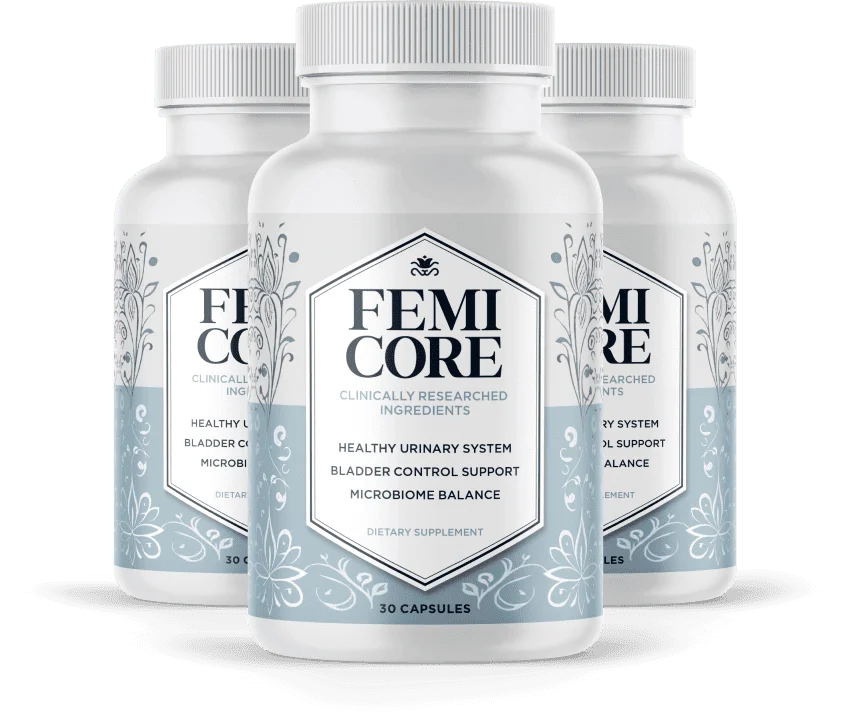
FemiCore is a blended dietary supplement marketed toward women seeking combined support for hormonal balance and urinary tract comfort.
The formula typically includes:
- Herbal extracts used in cycle-related wellness
- Probiotic strains linked to microbiome balance
- Vitamins and minerals tied to deficiency correction
- Urinary support ingredients often found in cranberry-based blends
The intended idea is simple: address multiple systems at once. Hormonal fluctuations, nutrient gaps, and bladder sensitivity often overlap, so the product takes a broad-support approach rather than focusing on a single pathway.
No published clinical trial exists on the finished product. Evidence comes from individual ingredient research rather than full formula validation.
Learn FemiCore Basics For Hormonal And Bladder Wellness Context
FemiCore Ingredients and What Science Suggests
The FemiCore ingredients list contains familiar components commonly seen in women’s health supplements. Each ingredient carries its own level of evidence, which does not automatically extend to the full blend.
Chasteberry extract
- Commonly used in PMS-support formulas
- Linked to prolactin modulation pathways
- Research strength: limited to moderate for cycle-related symptoms
- Effects vary widely across users
Cranberry extract
- Studied in urinary tract health contexts
- Contains compounds linked to bacterial adhesion reduction
- Evidence: moderate for urinary support use
- Not a treatment for infection conditions
Probiotic blend
- Supports vaginal and urinary microbiome balance
- Strain-specific effects only
- Research depends heavily on CFU count and strain naming
Magnesium
- Involved in muscle and nerve signaling
- Often used in cramp-related wellness routines
- Evidence: mixed, stronger in deficiency cases
Calcium and Vitamin D
- Strong research support for bone health
- Useful in deficiency correction
- Not linked directly to bladder or hormone treatment outcomes
Iron, B12, Folate
- Essential for blood and energy metabolism
- Strong evidence in confirmed deficiency states
- Can cause side effects if unnecessary supplementation occurs
Botanical additions
- Evening primrose oil and similar extracts may appear in some batches
- Evidence remains inconsistent across trials
- Often included for cycle comfort support
Key point: Ingredient presence does not equal clinical effectiveness for the full formula.
How FemiCore May Work in the Body
The working model behind FemiCore relies on multi-path support rather than one mechanism.
Hormonal Signaling Support
Chasteberry may influence endocrine signaling pathways tied to cycle regulation. Effects vary widely between individuals.
Urinary Tract Environment Support
Cranberry compounds may affect bacterial adhesion behavior. This relates to bladder support dietary supplement claims often seen in this category.
Microbiome Balance Support
Probiotics may support bacterial diversity in gut and vaginal systems. Strain selection matters more than total CFU in many cases.
Nutrient Repletion Pathway
Iron, magnesium, and vitamins correct deficiencies rather than provide immediate symptom relief.
Each mechanism acts independently. Combined outcomes vary depending on baseline health.
Evidence Behind FemiCore and Clinical Reality
The scientific profile of FemiCore supplement relies on ingredient-level data rather than product-level trials.
Chasteberry research shows mixed outcomes across PMS studies, with some users reporting cycle comfort changes while others see minimal effect. Cranberry research suggests moderate urinary tract support potential, mainly in prevention contexts, not active conditions.
Probiotics remain one of the most variable categories. Effects depend on strain identity, dose strength, and baseline microbiome balance. Without full strain disclosure, general expectations stay limited.
Minerals like magnesium and iron show clearer results when deficiencies exist. Without deficiency, benefits often plateau.
No peer-reviewed clinical trial confirms FemiCore as a complete formulation.
Check Scientific Evidence Behind FemiCore Ingredient Research Claims
Dosage Transparency and Label Gaps
One major consideration in FemiCore reviews and complaints discussions involves dosage clarity.
Most blended supplements share similar challenges:
- Proprietary blends may hide exact amounts
- Probiotic CFU counts may vary across batches
- Herbal standardization is not always disclosed
Typical studied ranges in research:
- Chasteberry: 20–40 mg daily
- Cranberry extract: 500–1000 mg daily
- Magnesium: 200–400 mg daily
FemiCore dosage may not match these ranges, depending on formulation batch.
Without precise dosing, translating research outcomes into expected user results becomes uncertain.
Safety Profile, Side Effects, and Interaction Risks
Safety for FemiCore depends heavily on personal health profile and medication use.
Possible side effects:
- Digestive discomfort from probiotics
- Mild nausea or constipation from iron
- Headaches linked to herbal sensitivity
- Hormonal fluctuations from chasteberry in sensitive users
Interaction considerations:
- Hormonal contraceptives may be influenced by herbal compounds
- Thyroid medications may interact with minerals
- Antibiotics may reduce probiotic effectiveness
- Blood thinners require caution with certain botanicals
Special caution groups:
- Pregnancy and breastfeeding stages
- Chronic kidney or liver conditions
- Hormone-related medical treatment users
Any persistent symptom after use requires stopping intake and consulting a healthcare provider.
How FemiCore Compares to Similar Women’s Health Supplements
The category of bladder support supplements for women includes many overlapping formulas. FemiCore sits within a multi-target segment.
Compared to single-focus products:
- Broader ingredient mix than cranberry-only supplements
- More complex than probiotic-only formulas
- Less targeted than prescription-based approaches
Key comparison points:
- Ingredient transparency
- Probiotic strain disclosure
- Standardization of herbal extracts
- Third-party testing availability
- Batch consistency across production
Some competitors provide clearer dosing labels, which can matter more than branding claims.
Hormonal Balance and Bladder Support Context
Products targeting bladder health supplements for women often overlap with hormone-support formulas.
Common categories include:
- Bladder control supplements for women
- Urinary tract support supplement blends
- Supplements for weak bladder support
- Natural supplements for weak bladder routines
These products share a similar goal: reduce urinary urgency, support comfort, and maintain microbial balance.
FemiCore sits at the intersection of hormonal wellness and urinary tract support, combining both directions into one formula rather than separating them.
This combined approach can be convenient, yet it also increases variability in response outcomes.
Read FemiCore Reviews And Complaints Summary From Users
Who May Consider FemiCore
FemiCore reviews of user fit generally align with women seeking mild, non-prescription support.
Possible candidates:
- Individuals experiencing mild cycle irregularities
- Women with occasional urinary sensitivity
- Users exploring bladder support dietary supplement options
- Those with confirmed nutrient gaps after testing
- Perimenopause stage individuals seeking general support
Caution groups:
- Pregnant or breastfeeding individuals
- Users on hormone therapy
- Individuals with chronic urinary conditions
- Those taking multiple prescription medications
A supplement works best when aligned with a clearly identified need rather than general curiosity.
What Results Timeline Looks Like
Expectations for FemiCore supplement vary by ingredient category.
Observed timelines from ingredient research:
- Chasteberry: 2–3 menstrual cycles
- Cranberry: several weeks to months for urinary support trends
- Magnesium or vitamins: weeks in deficiency correction cases
- Probiotics: variable response window depending on microbiome status
Short-term changes are uncommon. Gradual shifts are more typical.
No supplement in this category guarantees consistent outcomes across users.
Is FemiCore Legit and Does It Really Work?
Search intent around is FemiCore legit and does FemiCore work centers on trust and performance.
Current evidence picture:
- Ingredient science exists
- Product-level trials missing
- Effects depend heavily on individual biology
- No guaranteed outcome across users
Legitimacy relates more to formulation transparency and manufacturing standards than dramatic performance claims.
Frequently Asked Questions About FemiCore
Is FemiCore a good product?
It depends on individual needs. Ingredient profile aligns with common women’s health supplements, but full clinical validation for the formula does not exist.
Does FemiCore really work?
Effects depend on ingredient response. Some components have moderate research support, while others show mixed outcomes.
Is FemiCore legit or a scam?
No evidence suggests fraudulent activity. It functions like a typical dietary supplement with variable transparency depending on batch labeling.
What are FemiCore reviews saying?
User feedback across similar formulas often reports mixed results. Some note mild improvements in comfort, others report minimal change.
Can FemiCore support bladder leakage?
It is not designed as a treatment. It may support general urinary comfort, but it does not address medical conditions directly.
Conclusion
FemiCore sits within a crowded category of women’s health supplements combining hormone-related botanicals with urinary support nutrients. The ingredient profile is familiar, research exists at the component level, and safety depends on personal context more than product branding.
For anyone considering bladder support supplements for women or urinary tract support supplement routines, label transparency and personal health fit matter more than marketing claims.
Check the facts on the label. Compare dosing with research ranges. Then decide based on personal health needs and professional guidance.
Decide If FemiCore Is A Good Daily Supplement Choice
Affiliate Disclosure:
The links contained in this product review may result in a small commission if you opt to purchase the product recommended at no additional cost to you. This goes towards supporting our research and editorial team and please know we only recommend high quality products.
Disclaimer:
Please understand that any advice or guidelines revealed here are not even remotely a substitute for sound medical advice from a licensed healthcare provider. Make sure to consult with a professional physician before making any purchasing decision if you use medications or have concerns following the review details shared above. Individual results may vary as the statements made regarding these products have not been evaluated by the Food and Drug Administration. The efficacy of these products has not been confirmed by FDA-approved research. These products are not intended to diagnose, treat, cure or prevent any disease.